

You finally work up the nerve to play for an audience. Maybe it’s an open mic. Maybe it’s just your in-laws after dinner.
Either way, you summon every ounce of courage, throw caution to the wind, and take the plunge.
You make it through. The audience seemed to enjoy it and you’re feeling pretty good about yourself. And then….someone walks up and says, “You sounded great. But you should smile more next time. You looked like you were in pain.”
If you play the banjo, you’ve probably heard some version of this before. I certainly have. In fact, it’s so common it has a name: “banjo face.”
Just when you thought you were already feeling self conscious about everything you could possibly feel self conscious about, the world throws one more thing at you.
And I get it. People hear a banjo making happy, rollicking, joyful noises, and they expect to see a face making happy, rollicking, joyful expressions. They expect the face and the music to match.
But, if you’ve been accused of having banjo face, here’s what I want you to know: the problem is not you.
The problem is our well-meaning but ill-informed spectator whose advice rests on two common misconceptions about what’s actually happening when a human being tries to smile while playing a musical instrument.
Let’s tackle them one at a time…
Misconception 1: Smiling While Playing Is Easy
Back in the nineteenth century, neurologists noticed something strange about the way smiling could break down after brain damage.
Some patients couldn’t lift one side of their mouth when you asked them to smile. Tell them to grin, and half the face stayed frozen. But tell them a joke, and the whole face lit up, both sides, no problem at all.
Other patients showed the opposite pattern. They could grin on command just fine. But when something genuinely delighted them, the smile never came.
What was going on here?
It meant there wasn’t one pathway for smiling in the brain. There were two.
The first kind of smile is the one you produce on purpose. You decide to lift the corners of your mouth, and up they go. That signal starts in the frontal lobe, the conscious command center, then travels down through the brainstem and out to the muscles of your face. This is the smile you flash for the camera.
The second kind of smile you don’t decide to do at all. It starts with a feeling. Joy, amusement, delight. That feeling rises up from deeper, older structures in the brain and reaches the face by an entirely different route, lighting up a different set of nerves and a different set of muscles.
Two smiles. Two pathways. Only one of them begins with a genuine feeling, and you and I can tell them apart.
We’ve all been on the receiving end of a fake smile. The mouth does roughly the right thing, but the eyes don’t join in. And while you may not be able to explain why, there’s a part of you that knows. That’s your brain reading the difference between a signal sent from the frontal lobe and a signal sent by genuine feeling.
Which leads to an inconvenient fact: the only way to produce a genuine smile is to genuinely feel like smiling.
You can’t fake your way into the real thing. Your conscious mind simply doesn’t have the keys to that machinery. You can order the voluntary pathway around all day long, and you’ll get a voluntary smile, the kind everyone can spot from across the room.
Now, one might think that faking a smile while playing the banjo would be as simple as flipping the switch that voluntary pathway.
But you’d be wrong.
That’s because your conscious mind, the part that activates that voluntary smile, can only do one thing at a time. It’s a slow machine that processes in single file. To smile on purpose while playing, you have to keep toggling your attention back and forth between the smiling and the playing.
Most banjo players discover this the first time they try to fix banjo face. They decide to smile mid-tune, and the instant they do, things start going off the rails.
It’s the neurological equivalent of running two phone calls down one line.
After such an experience, most players silently vow to never try that again, and accept banjo face as their fate. After all, playing with banjo face is better than not being able to play at all.
At this point, I know what some of you might be thinking. Why not just crank out a genuine smile? If one is having a rollicking good time picking their banjo, shouldn’t that good feeling just trip the genuine pathway and provide an ear-to-ear grin for free?
Well that brings us to the second misconception…
Misconception 2: The Feeling While Playing Is Happiness
Here’s the thing about playing the banjo, or any instrument. It’s hard!
To produce sounds from a banjo that a human ear will tolerate, let alone enjoy, you have to wriggle the fingers of one hand in precise sequences at roughly eight wriggles per second, each one landing inside a window measured in milliseconds. It also requires the simultaneous wriggling of the fingers of the other hand to fret the strings at precisely the right moments.
For anyone but the most heavily seasoned veteran, pulling this off demands intense concentration. Every ounce of attention you have goes into the task.
So what is the player actually feeling up there?
Not the simple, sunny happiness the audience hears in the music. The audience gets to feel that. The audience isn’t doing anything.
If the player is feeling something, that feeling is flow.
Flow is what happens when a task is hard enough to demand everything you’ve got, but not so hard that you drown.
The psychologist Mihaly Csikszentmihalyi gave this state its name. Flow is one of the most rewarding experiences a human being can have. It’s the whole reason people pour thousands of hours into a skill in the first place. The skill is just the price of admission to the state.
Make no mistake, flow feels amazing. It’s intensely positive. It just isn’t the kind of feeling that lifts the corners of your mouth.
So now both doors to smiling are shut.
The voluntary smile wrecks your playing. The genuine smile never fires, because the emotion driving you isn’t the one that produces it.
That furrowed, faraway, half-constipated look isn’t the face of suffering. It’s the face of a brain at work.
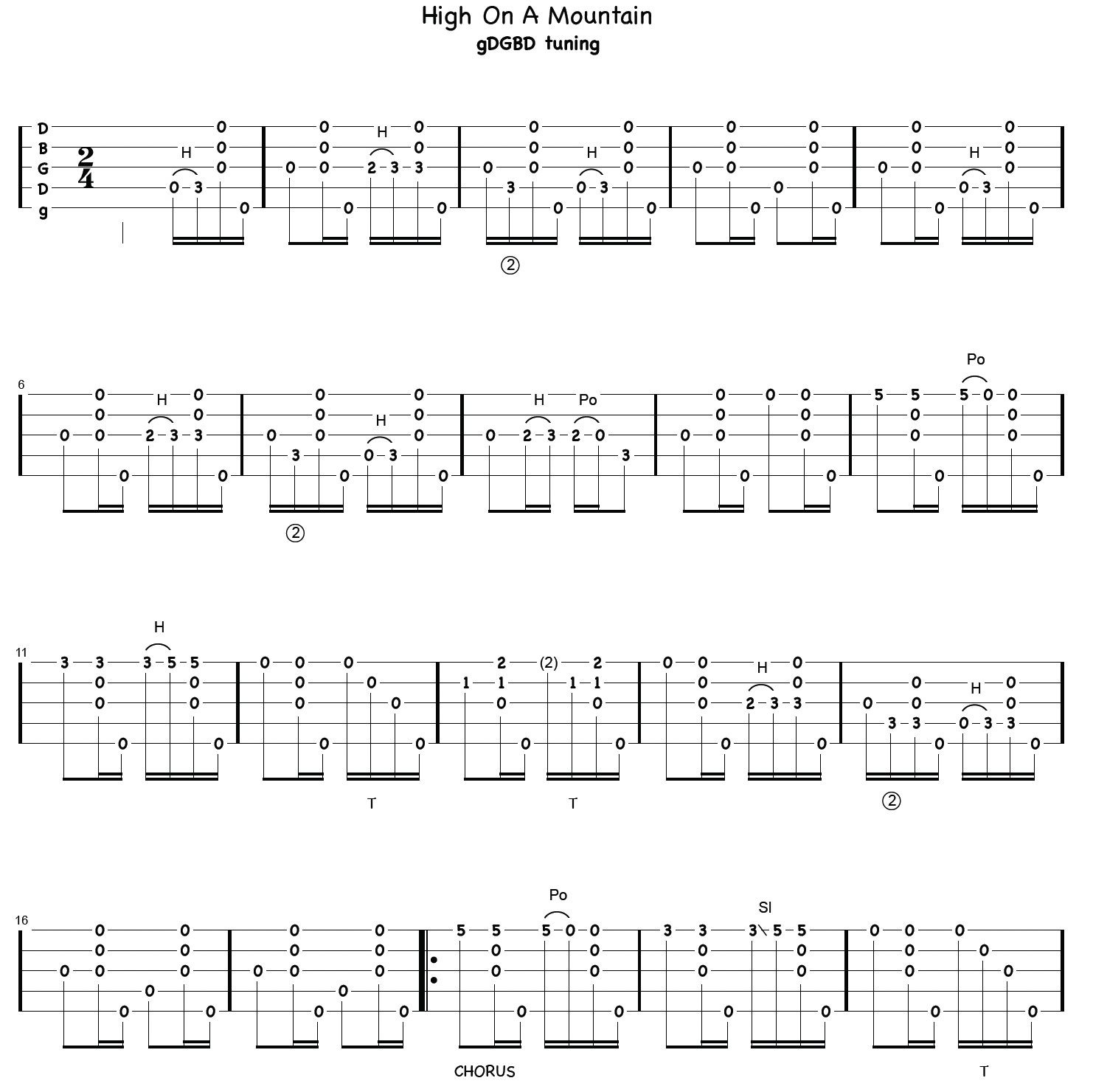
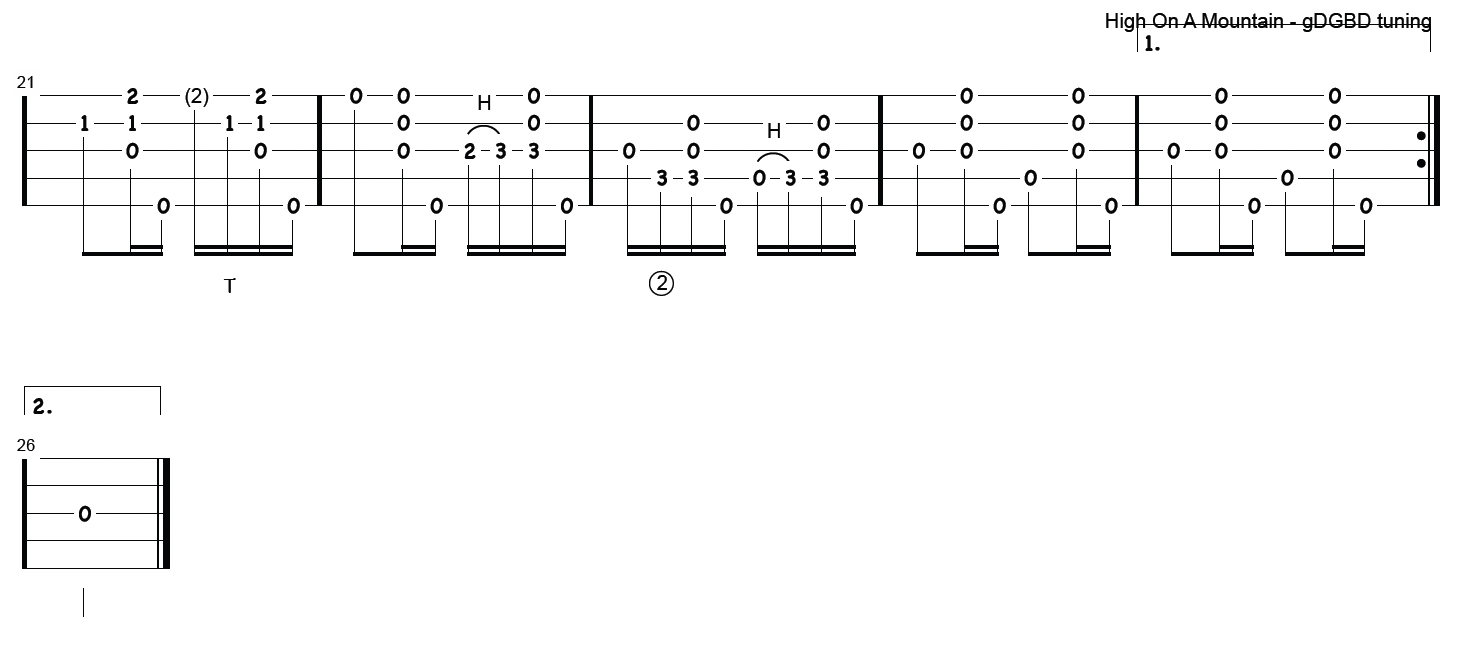
“High On A Mountain” - Demo and Tab
For those of you looking to practice your banjo face, here’s a demo and tab of Ola Belle Reed’s classic “High On A Mountain,” presented in both clawhammer (as Old Belle did) and 3 finger style.
“High On A Mountain” - Clawhammer
“High On A Mountain” - 3 Finger
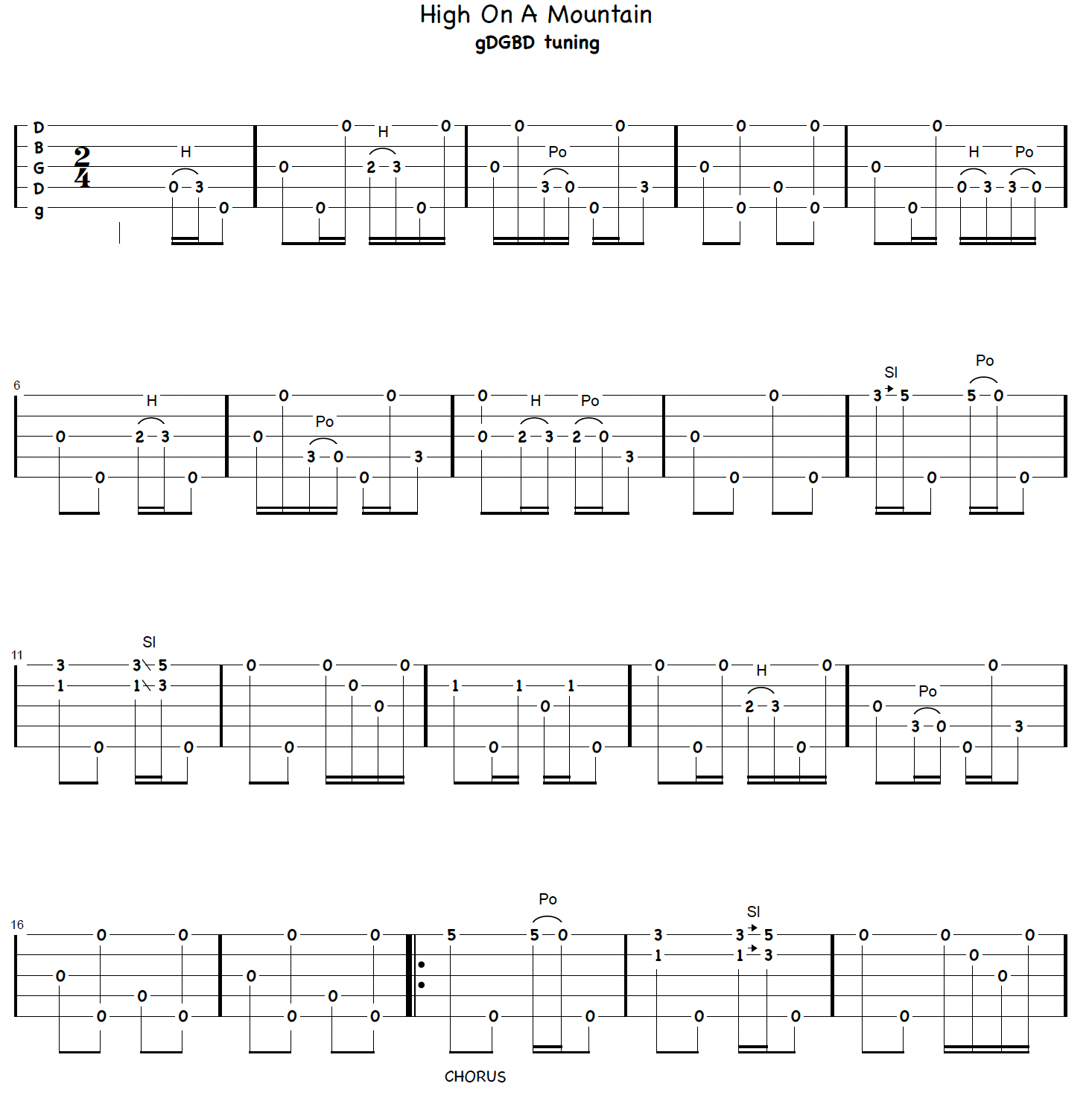
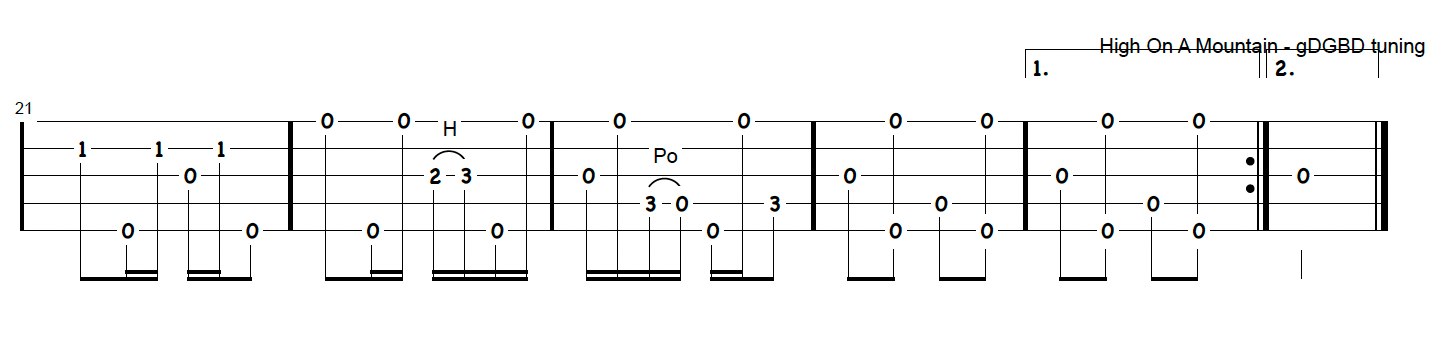
Note: the version I play in the videos is in “standard G” tuning, as above, but tuned down (to the key of E).
Steve Martin and Roy Clark are the only two I have ever seen genuinely smiling while playing. Someday, not likely, I would love to be that good.
Banjo face is bad, but it's even worse when you drool while you're fiddling. That happens to me sometimes. I'm concentrating so hard I don't even realize it.